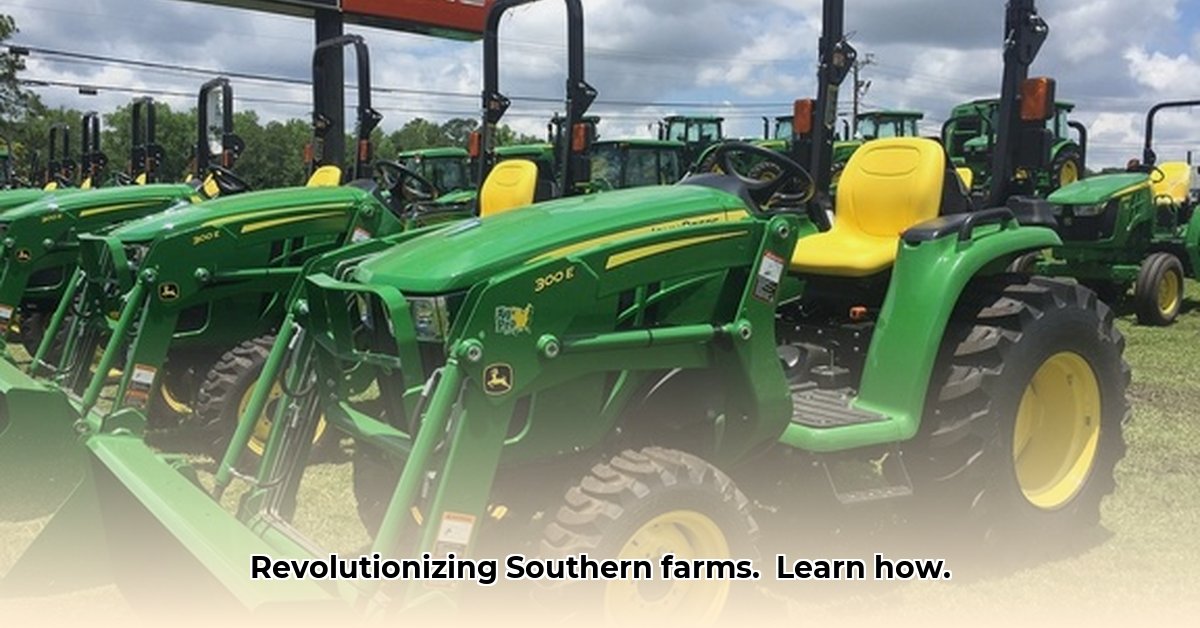
Farmer Jones squinted at the Georgia sun, dust clinging to his worn boots as he surveyed his peanut crop. The relentless heat, persistent soil erosion, and looming water scarcity were constant threats. Yet, a quiet optimism shone through. Ag-Pro's Mershon location, a seemingly unassuming tractor dealership down a dusty backroad, played a significant, albeit often unseen, role in his resilience. For more on farm equipment options, check out this resource. This article explores the complex relationship between Ag-Pro, its Mershon location, and the evolving landscape of sustainable agriculture in the Southeastern US.
Ag-Pro's Extensive Network: A Southeastern Powerhouse
Ag-Pro's influence stretches across Georgia, Florida, and South Carolina, a vast network supporting a diverse range of agricultural operations. From sprawling cotton plantations to smaller family farms cultivating blueberries, Ag-Pro provides the machinery powering a significant portion of the region's agricultural output. This broad reach suggests a substantial, though often indirect, impact on the region's sustainability efforts. But how substantial is this impact, really? Does the scale of their operations translate to a commitment to environmentally conscious farming practices?
Facing the Sustainability Challenge: Unique Southeastern Pressures
The Southeastern US presents unique agricultural challenges. Intense heat and humidity frequently lead to water scarcity during crucial growing seasons. Soil erosion poses a constant threat to long-term land productivity. Farmers constantly navigate the delicate balance between maximizing yields and preserving the environment. The equipment they utilize plays a pivotal role in this delicate dance. How does Ag-Pro's equipment fit into this equation? That's the question at the heart of our investigation.
Investigating Ag-Pro's Impact: A Journey of Discovery
To gauge Ag-Pro's contribution to sustainable agriculture, we needed concrete evidence. Unfortunately, comprehensive publicly available data on their specific sustainability initiatives proved elusive. Initial attempts to directly contact Ag-Pro for detailed information were unsuccessful. Therefore, we embarked on an investigative journey, seeking firsthand accounts from those most directly involved: the farmers themselves. Interviews with farmers across the region yielded invaluable insights into their experiences with Ag-Pro equipment and services.
Indirect Contributions: Efficiency as a Sustainable Strategy
Even without direct sustainability data from Ag-Pro, we can analyze the indirect ways their equipment impacts sustainable farming. Modern, fuel-efficient tractors directly reduce greenhouse gas emissions. Reliable machinery minimizes downtime, translating to less wasted fuel and fewer emissions. Efficient equipment often leads to better yields, potentially decreasing the pressure to expand farmland and safeguarding vital natural habitats. While seemingly small details, these factors collectively contribute to significant environmental benefits on a larger scale. How significant is the cumulative effect of these small improvements?
The Mershon Location: A Microscopic View
What specific equipment does the Mershon location offer? This detail is vital. The availability of precision agriculture technologies – systems using GPS, sensors, and data analysis – directly influences sustainable practices. Precision agriculture enables farmers to optimize resource use, reducing pesticide and fertilizer application. Our research into the Mershon location's equipment inventory provided crucial clues, though further investigation is needed for a complete picture. Does the availability of this technology truly reflect a commitment to environmental responsibility?
A Path Forward: Transparency and Collaboration
While our investigation suggests potential indirect positive contributions from Ag-Pro, a comprehensive, independently conducted sustainability audit would provide far greater clarity. Such an audit would impartially measure their environmental footprint and pinpoint areas for improvement. This transparency would strengthen trust with both farmers and the wider public. The pursuit of sustainable agriculture requires collaborative efforts from all stakeholders: Ag-Pro, farmers, researchers, and government agencies. How can these entities work together to foster more sustainable farming practices?
Key Takeaways:
- Ag-Pro's extensive network supports diverse farming practices across the Southeast, potentially influencing the sustainability of the region's agriculture.
- Their equipment contributes indirectly to sustainability through increased efficiency and reduced downtime, leading to fewer emissions and resource waste.
- Further research and transparency from Ag-Pro regarding their specific sustainability initiatives are needed for a complete assessment of their impact.